AI-Powered TikTok Shop Marketing: A Sora 2 Strategy That Drives Sales
Build a winning TikTok Shop marketing strategy with actionable insights on content, AI video, influencers, and ads. Learn how top brands drive real growth.
Before you even think about your first video, you have to get the basics right. A killer TikTok Shop strategy is built on a solid foundation: making your products easy to find, picking items that are actually trending, and pricing them to sell.
Getting this part wrong is like building a house on sand. You can have the most viral video in the world, but if it leads to a confusing or unappealing product page, you've lost the sale.
Building Your Foundation For TikTok Shop Success
Think of your TikTok Shop as a physical store. Before you open the doors and run a massive ad campaign, you'd make sure the shelves are stocked, the signs are clear, and the checkout process is smooth. The same logic applies here.
This initial setup work is what separates the shops that get a flood of sales from the ones that get a trickle of confused visitors. The goal is a seamless path from a user scrolling their "For You" page to them clicking "Buy Now."
Optimizing Your Seller Center Profile
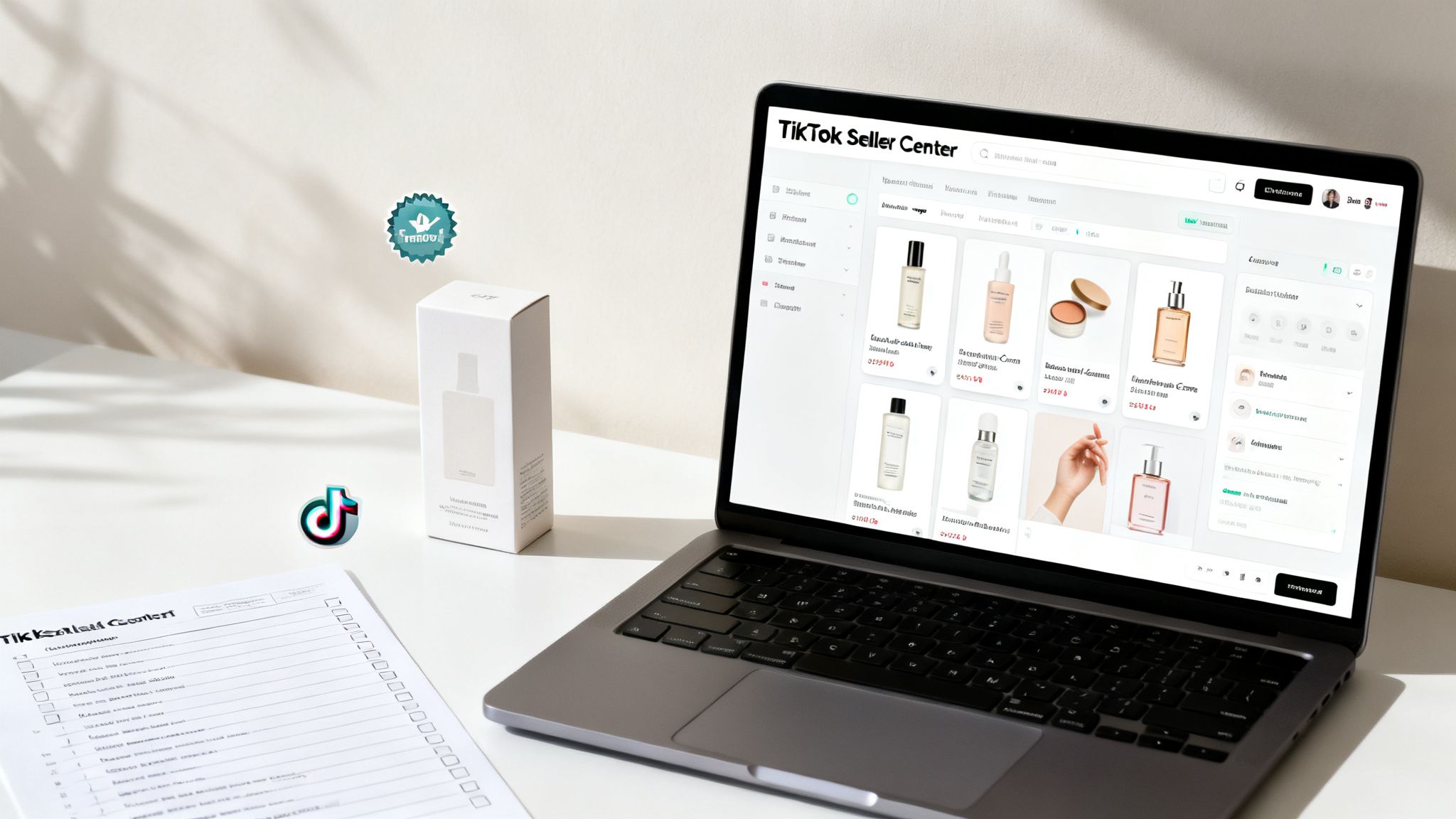
Your TikTok Seller Center is mission control. Don't just gloss over it; this is where you tell the algorithm exactly what you're selling and who should see it.
Start with the listings. They need to be airtight. We're talking high-quality images, clear titles, and descriptions that are packed with keywords people are actually searching for on the app. Yes, TikTok is a search engine, too.
Here’s what I focus on for every single product:
- Go Deep on Details: Don't just list the specs. Talk about the materials, the dimensions, and different ways to use the product. Answer questions before they're even asked.
- Show, Don't Just Tell: Use multiple high-res photos from every angle. Better yet, add short video clips showing the product in action. This is huge for building trust.
- Get Categorization Right: It sounds simple, but putting your products in the right category and subcategory is crucial. It’s a direct signal to the algorithm about your product's relevance.
Nailing this process gets your shop ready for discovery. It’s the groundwork that makes everything else—your content, your ads, your influencer collabs—work so much better.
This flow chart breaks down the three pillars of a strong foundation.
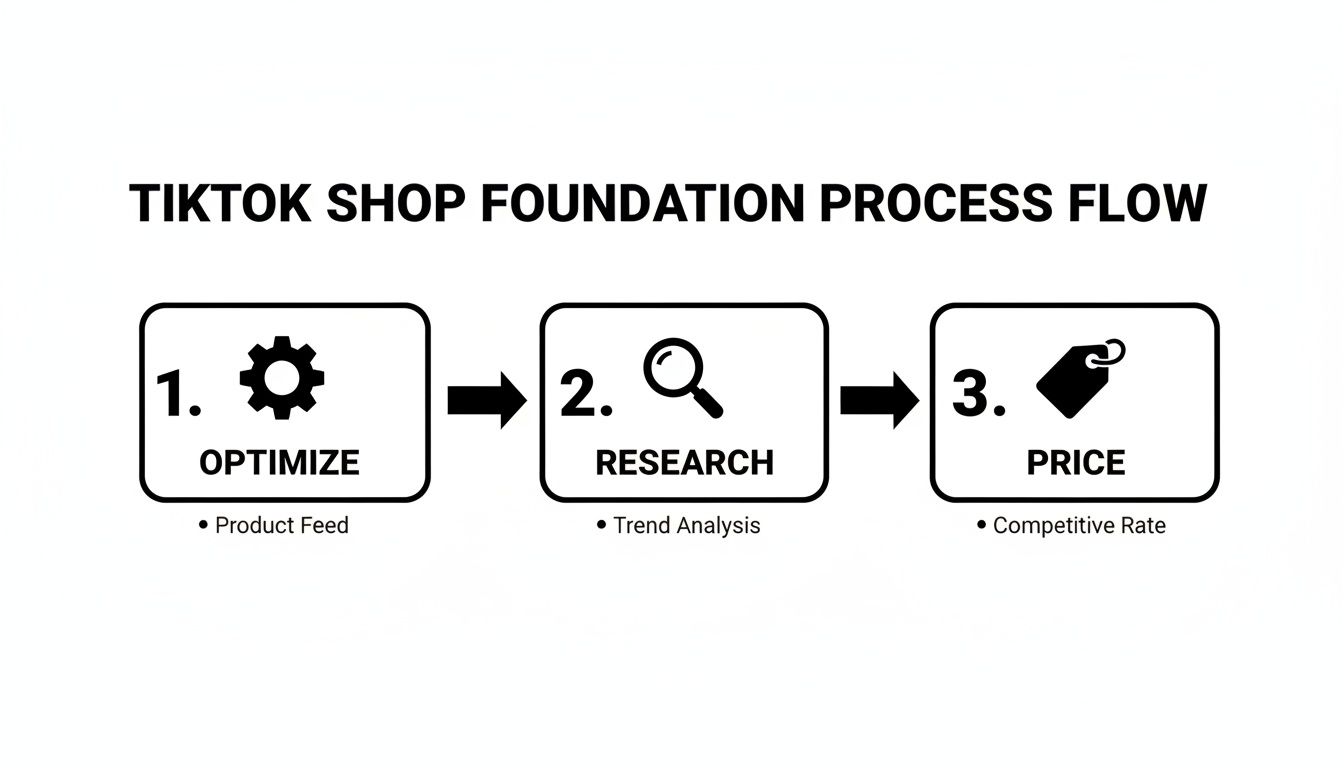
It really is that simple: get your feed right, know what's hot, and price it smart. Everything else builds from there.
Researching and Selecting Trending Products
Jumping on trends is the name of the game on TikTok. The platform moves at lightning speed, so you need to have your finger on the pulse of what's about to pop.
Look at the big players. The Beauty & Personal Care category, for example, is a monster, pulling in $2.49 billion in gross merchandise value. The brands winning there are the ones that spot a new "it" ingredient or a viral makeup hack and immediately feature products that fit the trend. Your best friend here is the "Products Marketplace" right inside the Seller Center—it shows you what's selling well and what creators are pushing hard.
A winning strategy means watching how people behave. Don't just track sales data; dive into the comments of viral videos in your niche. What are people asking for? What problems are they complaining about? Your next bestselling product is hiding in those comments.
This approach is a core part of any good social media strategy, which you can learn more about in this social media marketing guide.
Strategic Pricing For Impulse Buys
Let's be real: TikTok drives impulse buys. Your pricing needs to lean into that. It's not about being the cheapest on the platform, but about making the price feel like an irresistible deal at that moment.
You want a price point that makes someone think, "Oh, why not?" without torpedoing your profit margins. A lot of sellers find a sweet spot with psychological pricing—think $19.99 instead of a flat $20.00.
Also, make sure you’re using TikTok Shop’s own tools. Flash sales, coupons, and bundle deals create urgency, which is pure gold in this environment. When you combine a compelling price with great content, you create the perfect trigger for a quick conversion.
Building an Organic Content Engine That Sells
Paid ads will get you in front of people, but your organic content is what turns them into loyal customers. Think of it as your engine for creating real, authentic demand. This is where you stop being just a seller and start building a brand that people genuinely connect with and trust. Forget the polished, corporate posts—your organic TikTok strategy has to be built on content that entertains, educates, and feels completely native to the platform.
The goal isn't just to shove a product in someone's face with every video. It's about creating a consistent stream of content that makes viewers feel like they're part of something. When you get that right, the sales just happen. You’ve earned their trust, and that’s far more powerful than just pushing a product.
Nail Down Your Core Content Pillars
Instead of just posting whatever comes to mind, you need a plan. Structure your content around three or four core "pillars." These are the recurring themes your audience will come to expect from you, which helps build a solid brand identity. A good mix ensures you're not just hammering the "buy now" message, which is the fastest way to get people to scroll past.
Here are a few high-impact pillars that consistently work well on TikTok Shop:
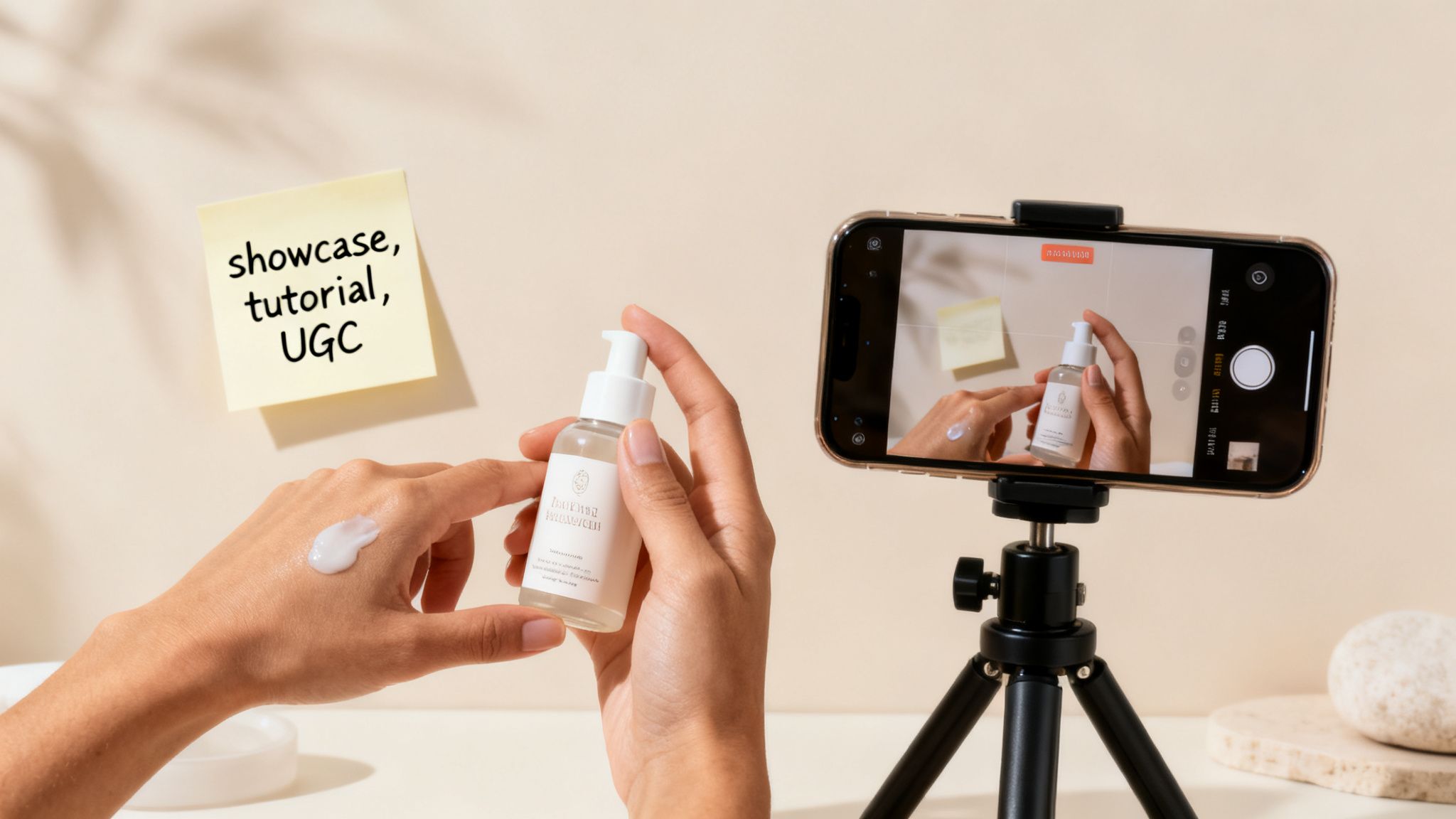
- Problem-Solving Demos: Position your product as the solution to a real-world problem. If you sell skincare, that’s a "Get Ready With Me" video showing how your product calms acne-prone skin. If it’s a kitchen gadget, show how it shaves 10 minutes off meal prep. These videos deliver instant value and make your product feel indispensable.
- Viral-Style Showcases: This isn't your typical product ad. It’s about creating a visually satisfying moment that highlights your product's "wow" factor. Think ASMR unboxings, oddly satisfying cleaning clips, or a jaw-dropping before-and-after reveal. The product is the star of an entertaining video, not just an item for sale.
- Spotlight on User-Generated Content (UGC): Nothing sells like social proof. Get your customers involved by creating a unique hashtag and encouraging them to share their experiences. Then, you can "stitch" or "duet" their videos, reacting to their reviews and showing some love. This gives you a stream of authentic, free content and makes your community feel seen and appreciated.
This balanced approach keeps your feed from getting stale. You end up building an audience that sticks around for your content, not just for a single purchase.
Lean Into TikTok’s Native Features
To succeed on TikTok, your content has to feel like TikTok. The algorithm actively rewards videos that use its built-in features, which is a huge key to boosting your organic reach. This means you have to get in on the culture of the app.
Don't just upload a slick ad you ran on another platform. Instead, make these elements part of your daily routine:
- Trending Sounds: Keep an eye on the audio that's blowing up on your "For You" page. Hopping on a trending sound at the right time can give your video a massive visibility boost.
- Native Effects & Filters: Play around with TikTok's effect library. A simple filter can add a dose of humor or visual pop that makes your content that much more shareable.
- Stitch & Duet: These are your secret weapons for jumping into conversations. Use them to add your take on a viral video, react to a trend, or even offer your product as a solution to a problem someone is talking about.
The real magic of TikTok is its algorithm's knack for connecting niche content with the perfect audience. You don't need a million followers to get millions of views. A single, well-made video that nails the trends, sounds, and user intent can literally put your shop on the map overnight.
The platform's explosive growth has created a bottomless appetite for new video. TikTok Shop generated $33.2 billion in global gross merchandise value in 2024, a mind-blowing 200% jump in just one year. That kind of expansion means sellers need a constant flow of fresh content to stay relevant, making efficient video production an absolute must. You can find more data on TikTok's incredible market expansion and what it means for content creators.
Set Up a Practical Content Calendar
Consistency is everything when it to growing an organic following. A content calendar is your best friend here—it helps you plan ahead, stick to your content pillars, and avoid the panic of having nothing to post. It doesn’t have to be fancy; a simple spreadsheet works perfectly.
Try to map out your content a week or two in advance, making sure to rotate through your different pillars. A typical week might look something like this:
| Day | Content Pillar | Video Idea |
|---|---|---|
| Monday | Problem-Solving Demo | "3 ways to use our new face serum" |
| Wednesday | UGC Spotlight | Duet a customer's glowing review |
| Friday | Viral-Style Showcase | ASMR unboxing of our latest product drop |
Having a simple framework like this turns your TikTok profile from just another storefront into a channel people actually want to follow. They come for the entertainment and stay to become customers. That’s the foundation of a truly durable and effective TikTok Shop marketing strategy.
Scaling Your Video Production With Sora 2
Let's be real: high-quality video is the lifeblood of TikTok, but even the most dialed-in brands eventually hit a production wall. The pressure to constantly churn out fresh, engaging content is immense, and it can quickly drain your time, budget, and creative energy. This is precisely where smart sellers are finding a massive advantage with Sora 2.
They’re looking beyond the traditional shoot-and-edit cycle and are using powerful AI video generation to scale their content creation. This isn’t about replacing your creative team; it’s about giving them superpowers. It’s about producing professional-looking ecommerce and product videos at the relentless pace TikTok demands.
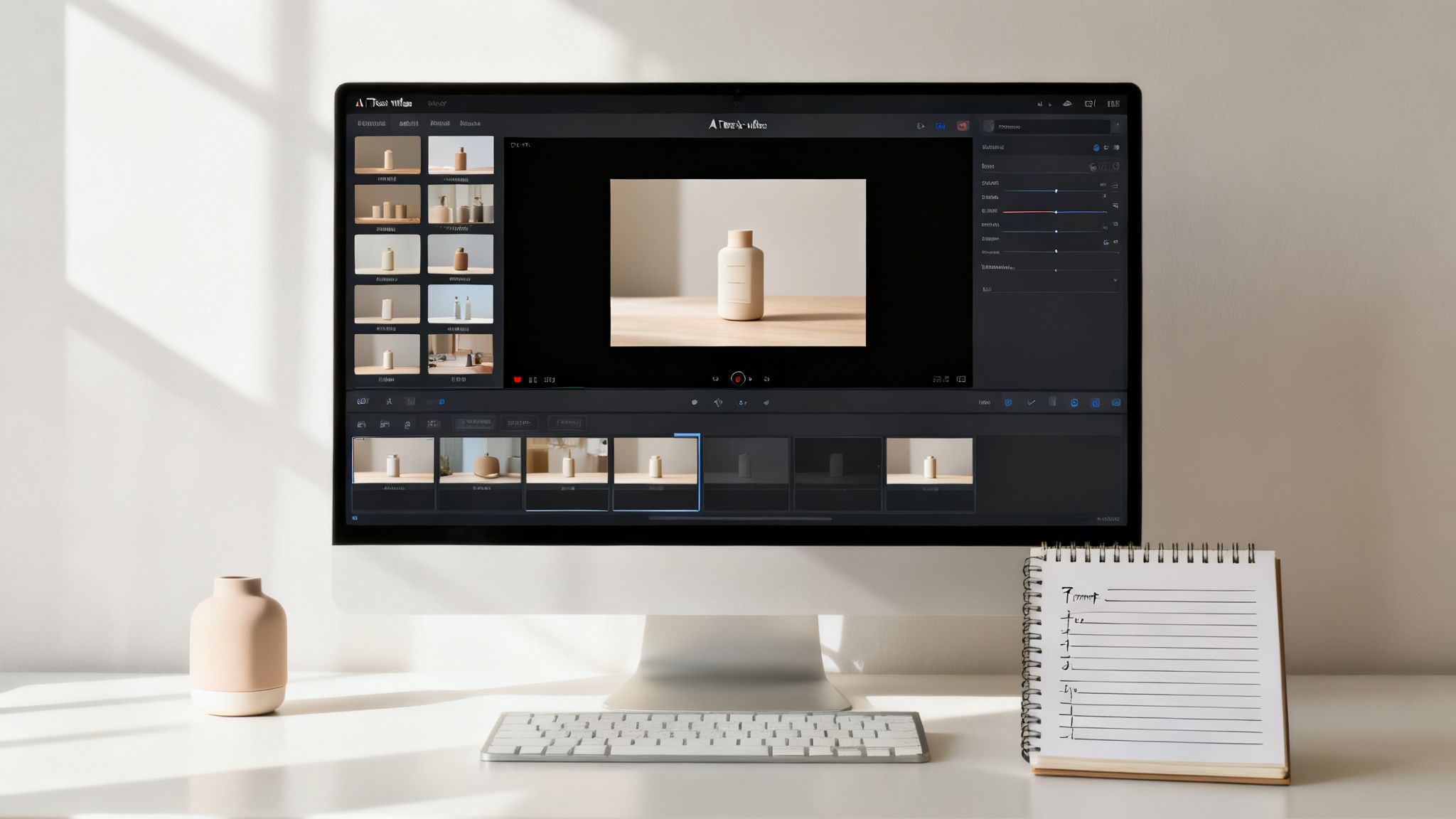
From Text Prompts to Cinematic Product Videos with Sora 2
Imagine describing your perfect product video in a few sentences and then watching the Sora 2 video generator bring it to life. Instead of blocking out days for a location shoot, you can generate a dozen different creative concepts for your TikTok ads in the time it takes to drink your morning coffee.
Think about a skincare brand. In minutes, they could generate Sora 2 video examples showcasing their moisturizer in completely different vibes—a misty, serene rainforest, a minimalist sun-drenched bathroom, or even a sleek, futuristic cityscape. All without ever leaving the office. This unlocks the ability to rapidly test which visual themes actually connect with your audience, which is a total game-changer for AI video marketing on a platform that thrives on constant experimentation.
Crafting High-Converting Sora 2 Prompts
The secret to getting stunning AI-generated video is all in the Sora 2 prompts. If you give the AI vague instructions, you'll get vague, generic results. To create videos that actually stop the scroll and sell products, your prompts need to be rich with detail, specifying not just the what but also the how—the mood, the lighting, and even the camera work.
Here’s a quick look at how you could craft Sora 2 prompts for a fictional "Aura Glow Serum" to hit different marketing angles for TikTok ads.
Sora 2 Video Prompts For TikTok Shop Products
These are a few examples of how to use Sora 2 style models to generate high-converting ecommerce product videos, tailored to specific goals.
| Video Goal | Example Sora 2 Prompt | Key Elements |
|---|---|---|
| Product Showcase | "A macro shot of a single drop of a luminous, golden serum falling onto a dewy orchid petal. Soft, natural morning light, cinematic, 8K, hyperrealistic detail." | Focuses on texture, quality, and pure aesthetic appeal. |
| Lifestyle/Aspiration | "A woman with radiant skin laughing in a sun-drenched garden, gently applying a serum from a sleek glass bottle. The camera is handheld and candid, warm golden hour glow." | Connects the product to a desirable feeling or outcome. |
| Problem/Solution | "Split screen: left side shows a dull, tired cityscape in cool tones. Right side shows a vibrant, glowing woman in a lush green park. The two worlds slowly merge as she uses the serum." | Visualizes the transformation the product provides. |
Notice how specific those are? They’re intentionally crafted to guide the Sora 2 text-to-video AI toward a video with a clear commercial purpose. Mastering prompt writing is quickly becoming a non-negotiable skill for any marketer serious about using AI in their content strategy.
Building Storyboards for Product Narratives with Sora 2
A single, beautiful clip is nice, but a video that tells a story is what truly grabs viewers and makes them want to buy. This is where you can go a level deeper. Advanced tools like the Sora 2 storyboard generator let you map out multi-scene narratives that can walk a customer through a complete journey.
Don't just show your product—tell its story. An AI-powered storyboard from the Sora 2 video generator lets you map out a beginning, middle, and end, turning a simple product feature into a compelling narrative that hooks viewers and makes them want to see what happens next.
For instance, a brand selling a durable travel backpack could use a three-part storyboard to build a narrative:
- Scene 1: A young traveler packing the backpack in a cozy apartment, showcasing its many clever compartments.
- Scene 2: A dynamic shot of the backpack enduring a sudden downpour on a bustling city street, highlighting its waterproof material in action.
- Scene 3: The same traveler sitting on a mountain peak at sunset, easily pulling a snack from the front pocket.
This narrative structure does so much more than just list features; it demonstrates the product's value in a real-world context, making it far more persuasive. This strategic approach to AI video marketing, supercharged by Sora 2, is a key piece of a truly sophisticated and scalable TikTok Shop marketing strategy.
Driving Sales Through Creator Partnerships
Your organic content and those slick Sora 2-generated videos can definitely move the needle, but nothing builds trust on TikTok like a recommendation from a real person. Creators aren't just a part of the platform; they're the lifeblood of it. If you're serious about your TikTok Shop marketing strategy, building an authentic partnership program isn't just a nice-to-have, it's a must.
This is about more than just chasing vanity metrics like likes and follows. We're talking about building a genuine sales channel powered by people who actually influence purchasing decisions. When a creator someone trusts shows off your product, it stops feeling like an ad and starts feeling like a hot tip from a friend.
Identifying The Right Creators For Your Niche
First things first: you need to find partners whose audience is a perfect match for your ideal customer. A common mistake I see brands make is casting the net way too wide. Forget chasing the biggest names for a minute and focus on relevance.
Your best starting point is the TikTok Creator Marketplace. It's the platform's built-in tool for connecting brands with creators who have already been vetted. You can filter by niche, audience demographics, and engagement rates to quickly build a solid shortlist.
But don't stop at the follower count. You need to go deeper.
- Scour their existing videos: Have they promoted products before? Does their style naturally align with your brand's vibe?
- Read the comments: Is their audience actually engaged and positive? Look for questions about products they feature—that's a great sign.
- Gauge their authenticity: Does their content feel real, or is their feed just one long ad? TikTok users can spot a phony partnership from a mile away.
This research phase is absolutely critical. Trust me, a creator with 10,000 highly engaged followers in your specific niche will almost always drive more sales than one with a million generic followers.
Structuring Your Creator Collaborations
Once you’ve got a list of potential partners, it’s time to structure a deal that makes sense for everyone. The worst thing you can do is be rigid. The best partnerships give creators the freedom to weave your product into their unique content style.
A creative brief should offer clear guidelines—mention these key points, use this call-to-action—but you have to resist the urge to script the entire video. The creator knows what their audience wants to see.
Let creators create. Your job is to provide the product and the key talking points. Their job is to translate that into content that resonates with their community. The moment it feels like a forced, scripted ad, you've lost the magic.
There are a few different ways you can structure these partnerships:
- Affiliate Programs: This is a pure performance model. Creators earn a commission on every sale they generate through their link or code. It’s a fantastic, low-risk way to get started because you only pay for actual results.
- Flat-Fee Collaborations: For bigger creators or specific campaigns (like a product launch), a one-time payment for a certain number of videos is pretty standard.
- Product Seeding: This involves sending free products to a hand-picked list of micro-influencers. It’s a great way to generate organic buzz and user-generated content without a huge upfront cost.
This creator-driven ecosystem isn't just a fleeting trend; it's a massive economic engine. Spending on TikTok influencer marketing is projected to hit $2.35 billion in 2025, a massive 87.4% increase from 2024. This explosion reflects a fundamental shift in how people shop, with 44.7% of TikTok users now making a purchase based on an influencer's recommendation. As you can imagine, this puts immense pressure on creators to produce high-quality, almost cinematic content to stay effective. You can get a closer look at the data by checking out the full research about TikTok shopping statistics.
Maximizing The Value of Creator Content
The work isn't over once the creator hits "post." That content they made is an incredibly valuable asset, and you should be repurposing it. Always make sure you have the creator's permission, but you should absolutely be using their best-performing videos in your paid ad campaigns.
This tactic is a game-changer. A video from a trusted creator often performs worlds better as a paid ad than a polished, brand-produced commercial because it comes with built-in social proof. It looks and feels native to the platform, helping it blend right into the "For You" page and dodge the dreaded ad fatigue.
By pairing authentic creator partnerships with a smart paid amplification strategy, you create a powerful feedback loop. The creator drives the initial organic sales and builds credibility. Then, you use that very content to reach a much broader audience, maximizing your ROI and building a far more resilient and effective marketing machine.
Optimizing Your Paid Ads For Maximum ROAS
While a killer organic strategy is your foundation, paid advertising is the jet fuel that launches your TikTok Shop into the stratosphere. Once you're ready to scale, getting your hands dirty in the TikTok Ads Manager is non-negotiable. This isn't about just boosting a few posts; it's about engineering a sophisticated, data-driven machine that pumps out a measurable return on ad spend (ROAS).
Think of it like this: your organic content and creator partnerships have already started a fire. Paid ads are the gasoline you pour on it to reach thousands, or even millions, of new potential customers who look just like your best ones.
Navigating Campaign Objectives And Ad Formats
The first thing you have to do inside Ads Manager is tell the algorithm what you want. Choosing the right campaign objective is critical because it dictates how TikTok optimizes your ad delivery. For anyone selling on TikTok Shop, the choice is clear: "Product Sales" using the "TikTok Shop" product source.
Selecting this specific objective unlocks the most powerful ad formats built for getting sales directly on the platform:
- Video Shopping Ads (VSA): These are the workhorses of your TikTok Shop ad strategy. They blend right into the user's "For You" page but have interactive product cards that send people straight to your product page—all without leaving the app. That seamless experience is pure gold for capturing impulse buys.
- LIVE Shopping Ads: If you're going live, these ads are your best friend. They push traffic directly to your live stream, catching people when they're already in a shopping mood. The real-time energy and urgency of a live event can create massive sales spikes.
So, how do you choose? VSAs are perfect for your always-on campaigns, consistently driving sales day in and day out. LIVE Shopping Ads are your special event power-play, perfect for hyping up new product drops or flash sales.
Mastering Audience Targeting And Budgeting
Okay, objective set. Now, who are you showing these ads to? TikTok's targeting is incredibly deep, letting you go from super broad audiences to laser-focused segments.
A great starting point is building lookalike audiences from your most valuable data, like your existing customer list or people who have added items to their cart. This tells TikTok, "Go find me more people who look just like these high-intent users." As you collect more data, you can run powerful retargeting campaigns to bring back shoppers who visited your store but didn't pull the trigger.
Your budget strategy has to evolve. Start with a smaller daily budget to test out different creatives and audiences. Once the TikTok Pixel has gathered enough data and you've found a winning combo, you can confidently crank up the spending on your top-performing ad sets to maximize that ROAS.
And don't sleep on interest and behavior targeting. You can get incredibly specific, targeting users based on the videos they watch, the creators they follow, or even the hashtags they engage with. This is your ticket to finding highly relevant, untapped audiences who haven't heard of you yet. For brands looking to outsource this or just scale faster, exploring the 5 Best TikTok Ads Agencies For DTC Brands can provide expert guidance on these more advanced strategies.
The Art Of Relentless Creative Testing
On TikTok, creative is everything. The polished, corporate ad that works on other platforms will probably bomb here. Your best ads will always be the ones that feel native to the platform. And that means you have to test. Relentlessly.
Never get comfortable with just one ad creative. For every single campaign, you should be testing multiple versions of these core elements:
- The Hook (First 3 Seconds): Test different opening lines or visuals. Does a question grab more attention than a shocking statement? Does a quick product demo stop the scroll?
- The Visuals: Try out different video styles. Pit a lo-fi, iPhone-shot video against a more polished one you made with a tool like the Sora 2 text-to-video generator. You might be surprised by what wins.
- The Call-to-Action (CTA): Experiment with your on-screen text and audio cues. Is "Shop Now" more effective than "Get Yours Today"? Test it.
This constant cycle of testing, learning, and iterating is what separates the brands that barely break even from the ones that hit a 3x, 5x, or even 10x ROAS. By installing the TikTok Pixel, you can track every single conversion and tie it back to the exact ad that drove the sale. That's the hard data you need to make smarter and smarter decisions.
Answering Your Top TikTok Shop Marketing Questions
Even the best-laid plans hit a few bumps. As you dive into your TikTok Shop strategy, you're bound to run into some common questions. Let's tackle the ones I hear most often from sellers and creators trying to make their mark.
What Actually Sells on TikTok Shop?
You can find success with a lot of different products, but one category absolutely dominates the platform. Beauty and Personal Care is the undisputed champion, pulling in a staggering $2.49 billion in gross merchandise value. That accounts for more than 22% of all sales on TikTok Shop.
This isn't just a fluke. The entire platform is built for visual, demo-heavy content, which is a perfect playground for makeup tutorials, skincare routines, and "get ready with me" videos. The proof is in the numbers: 78% of users have bought something after seeing a creator post about it. When you drill down into beauty content specifically, you find that one in four viewers make a purchase. The connection is undeniable. You can get a deeper look into the top trends among TikTok Shop sellers to see what’s driving this massive success.
How Much Should I Be Paying Creators?
This is the million-dollar question, and the honest answer is: it depends. There’s no universal rate card. A creator’s follower count, engagement metrics, and specific niche all play a huge role in what they charge. My advice is to stay flexible.
Here are the most common ways to structure a deal:
- Affiliate Commission: This is a great starting point, especially if you're on a tight budget. You give the creator a unique code or link, and they get a cut (usually 10-20%) of every sale they generate. It’s a low-risk, win-win situation.
- Product Seeding: Think of this as a trade. You send free products to micro-influencers (those with under 50k followers) and they create a video review. It’s a fantastic way to get genuine, user-generated content without a big cash outlay.
- Flat Fee: For more established creators, a flat fee for a set number of videos is the norm. This could be a few hundred dollars or run into the thousands. Always ask to see their metrics from past brand deals to make sure your offer is fair.
A hybrid model is often the most powerful approach. By offering a base flat fee, you show you value their time and effort. Then, you add an affiliate commission on top to motivate them to drive as many sales as possible. It gets everyone pulling in the same direction.
What's the Ideal Video Length for TikTok Shop?
TikTok may have started with 15-second clips, but the game has changed. For content designed to sell products, the sweet spot is now somewhere between 20 and 45 seconds.
That’s just enough time to grab someone's attention in the first three seconds, show them how your product solves a problem, and hit them with a clear call-to-action. You can go longer for detailed tutorials or compelling stories, but if your goal is a quick conversion, shorter and punchier almost always wins.
How Should I Deal with Negative Comments or Reviews?
Whatever you do, don't just delete them (unless it's obvious spam). Handling negative feedback the right way is a golden opportunity to build trust.
Jump in and respond publicly and professionally. Acknowledge their problem, show empathy, and offer to make it right. The key is to then move the conversation to a private channel, like DMs, to sort out the specifics.
Why? Because potential customers are absolutely reading your comments. When they see you actively solving problems and standing by your product, it can be even more convincing than a page full of five-star reviews.
Ready to stop the production bottleneck and create stunning, sales-driving product videos in minutes? The Sora 2 video generator gives you the power to generate cinematic video content from simple text prompts. Create endless variations for your TikTok ads, build engaging product storyboards, and scale your content without scaling your budget.
Start creating with Sora 2 style models today at https://saro2.ai