How to Sell on TikTok Shop and Go Viral with AI Video
Discover how to sell on TikTok Shop with our complete guide. Learn setup, content strategy, and how to create viral product videos with Sora 2 AI.
Selling on TikTok Shop is a game-changer. It lets you turn your viral videos directly into sales by embedding a shopping cart right in your posts. Think of it as a direct line from discovery to checkout, letting you tap into TikTok's massive, high-intent audience without ever forcing them to leave the app.
Understanding the TikTok Shop Gold Rush
Before we get into the nuts and bolts of setting up, you need to understand why TikTok Shop isn't just another marketplace—it's a whole new way to think about social commerce.
On traditional e-commerce platforms, you're constantly fighting to drive traffic from social media to your website. TikTok Shop flips that model on its head. It merges entertainment and shopping into one fluid experience, creating the perfect storm for impulse buys driven by authentic, user-generated-style content.
The numbers behind this "gold rush" are genuinely mind-boggling and show just how big the opportunity is.
The Power of Shoppertainment
What's really working here? It's a few key things:
- Explosive Growth: The platform has cracked the code on turning viewers into buyers, opening up a massive revenue stream for sellers who learn its unique language.
- High Buyer Intent: People on TikTok aren't just doomscrolling. They're actively looking for products they see creators they trust using and recommending.
- Authenticity Sells: The shops that are absolutely crushing it are the ones making content that feels native to the platform. We're talking less polished ad, more genuine "you have to see this" recommendation from a friend.
This powerful mix of a captive audience and an engaging format has fueled some truly unprecedented growth. In the first half of 2025 alone, TikTok Shop pulled in a staggering $26 billion in global Gross Merchandise Value (GMV).
Here in the US, where it only launched in September 2023, the growth has been even more dramatic. Sales rocketed an incredible 407% in 2024 and jumped another 108% in 2025 to hit $15.82 billion. That’s enough to claim 18.2% of all US social commerce in a ridiculously short amount of time. You can dig deeper into these trends over on Awisee.com.
The screenshot below really puts its rapid takeover of US social commerce into perspective.
This chart makes it crystal clear how quickly TikTok Shop has become a major player, blowing past established platforms and proving its raw selling power.
TikTok Shop At a Glance Key Growth Metrics
This table summarizes the most critical statistics that illustrate TikTok Shop's rapid ascent and market power, providing a quick reference for sellers.
| Metric | Statistic | Significance for Sellers |
|---|---|---|
| Global GMV (H1 2025) | $26 Billion | Highlights the massive global sales volume and international opportunity. |
| US GMV (2025) | $15.82 Billion | Shows the immense and rapidly growing market size in the United States alone. |
| US Social Commerce Share | 18.2% | Demonstrates its dominance and proves it's a critical channel, not just a trend. |
| US Sales Growth (2024) | 407% | Illustrates the platform's explosive, first-mover advantage for early adopters. |
These metrics aren't just numbers; they're a clear signal that if you're not on TikTok Shop, you're missing out on one of the biggest shifts in e-commerce.
At its core, TikTok Shop thrives on the psychology of 'shoppertainment.' It transforms the transactional nature of buying into an event—a live stream feels like a party, and a viral product demo feels like discovering a hidden gem.
Getting this dynamic is your first real step. For a fantastic walkthrough on getting started, check out this guide on how to sell on TikTok Shop. It breaks down those initial steps in great detail.
Here's the key takeaway for anyone just starting: think like a creator first and a retailer second. Your success hinges not just on what you sell, but how you sell it through compelling, short-form video stories. This is where tools like the Sora 2 AI video generator are becoming invaluable, helping sellers create those cinematic, high-quality product videos that have the authentic, scroll-stopping feel needed to win on the platform.
Getting Your TikTok Shop Ready for Business
Alright, you see the opportunity. Now it's time to build your storefront. Setting up your shop is pretty straightforward, but a few key decisions upfront can save you a world of headaches later and get you verified faster. The first big choice you'll make is how you want to run the show.
You’ve got two main ways to get your shop live. You can either register directly through the TikTok Seller Center or, if you're already set up elsewhere, integrate an existing e-commerce platform. For most people, that means Shopify. Each path has its own perks, and the right one really depends on where your business stands today.
Choosing Your Setup Path
If you're completely new to e-commerce, I'd suggest starting directly in the Seller Center. It keeps everything—from listing products to fulfilling orders—all under one roof. It’s the simplest, most direct route to getting started.
But what if you already have a bustling Shopify store? In that case, the integration is a no-brainer. It automatically syncs your inventory, products, and orders, which means you don't have to manage two separate stock counts. Trust me, that kind of automation is a lifesaver once the orders start rolling in.
My two cents: I've seen way too many new sellers get tangled up trying to manage separate inventories. If you're on Shopify, use the integration. If you're starting from scratch, the Seller Center is more than enough to get you going. Don't overcomplicate things right out of the gate.
Navigating the Verification Process
No matter which path you take, you'll have to go through TikTok's verification process. This is a non-negotiable step designed to keep the platform safe and trustworthy for shoppers. You'll need to have documents ready to prove you are who you say you are.
For individual sellers, this usually means having a government-issued ID handy, like a passport or driver's license.
For businesses, the requirements are a bit more formal. You'll likely need:
- Official company registration documents (like your EIN in the US).
- An ID for the person who is the legal representative of the business.
Get these documents together before you start. It makes the whole process so much smoother. Verification times can vary, but being prepared will absolutely speed things up. Once you're verified, you can finally plug in your payment and shipping details and get ready for that first sale.
The explosive growth in seller numbers really speaks to the platform's power. This chart breaks down the key metrics that are drawing so many brands to the platform.
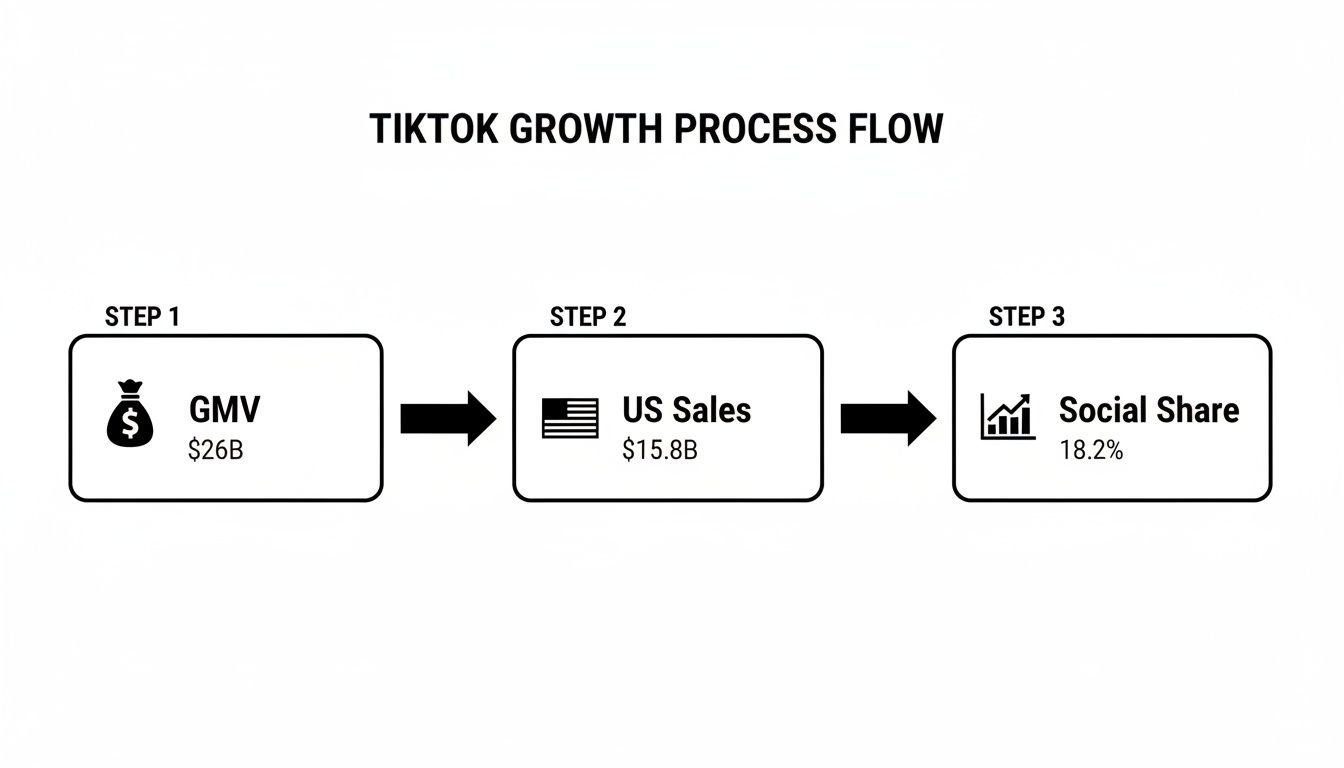
This flow really puts into perspective the massive financial engine behind TikTok Shop, showing everything from its global GMV to its dominant share of the US social commerce scene.
Setting Up Your Shop Profile
Think of your shop profile as your digital storefront—first impressions matter. Here's a quick checklist to nail the basics:
- Shop Name: Pick something catchy that reflects your brand. If you can, keep it consistent with your main TikTok handle.
- Profile & Cover Images: Don't skimp here. Use high-quality, professional images that match your brand's vibe. Your logo is usually the best bet for the profile picture.
- Warehouse & Shipping: Be precise when setting up your "ship-from" address. This is what TikTok uses to calculate shipping times and costs, and getting it wrong can cause major issues.
- Return Policy: Be crystal clear about your return address and policies. While you have to follow TikTok's rules, a straightforward policy of your own helps build trust with buyers.
The seller community is absolutely booming. There are over 15 million active sellers globally, and in the US alone, more than 31,000 stores have launched since September 2023. This is all fueled by over 7.5 million businesses using the platform to reach a massive audience of 170 million Americans, creating a marketplace with over 53 million buyers. You can dive deeper into these powerful TikTok Shop statistics if you're curious. By taking the time to get these foundational pieces right, you're setting yourself up to compete and win in this incredibly active space.
Alright, once your shop is verified and live, it’s time to get down to the real work: figuring out what to sell and—more importantly—how you're going to sell it.
On TikTok, your product listings and video content are two sides of the same coin. A fantastic video can pull a user to your product page, but a sloppy, uninspired listing will kill the sale in a heartbeat. You really have to nail both.
It all starts with creating product pages that are optimized not just for TikTok's algorithm, but for the lightning-fast attention span of its users.
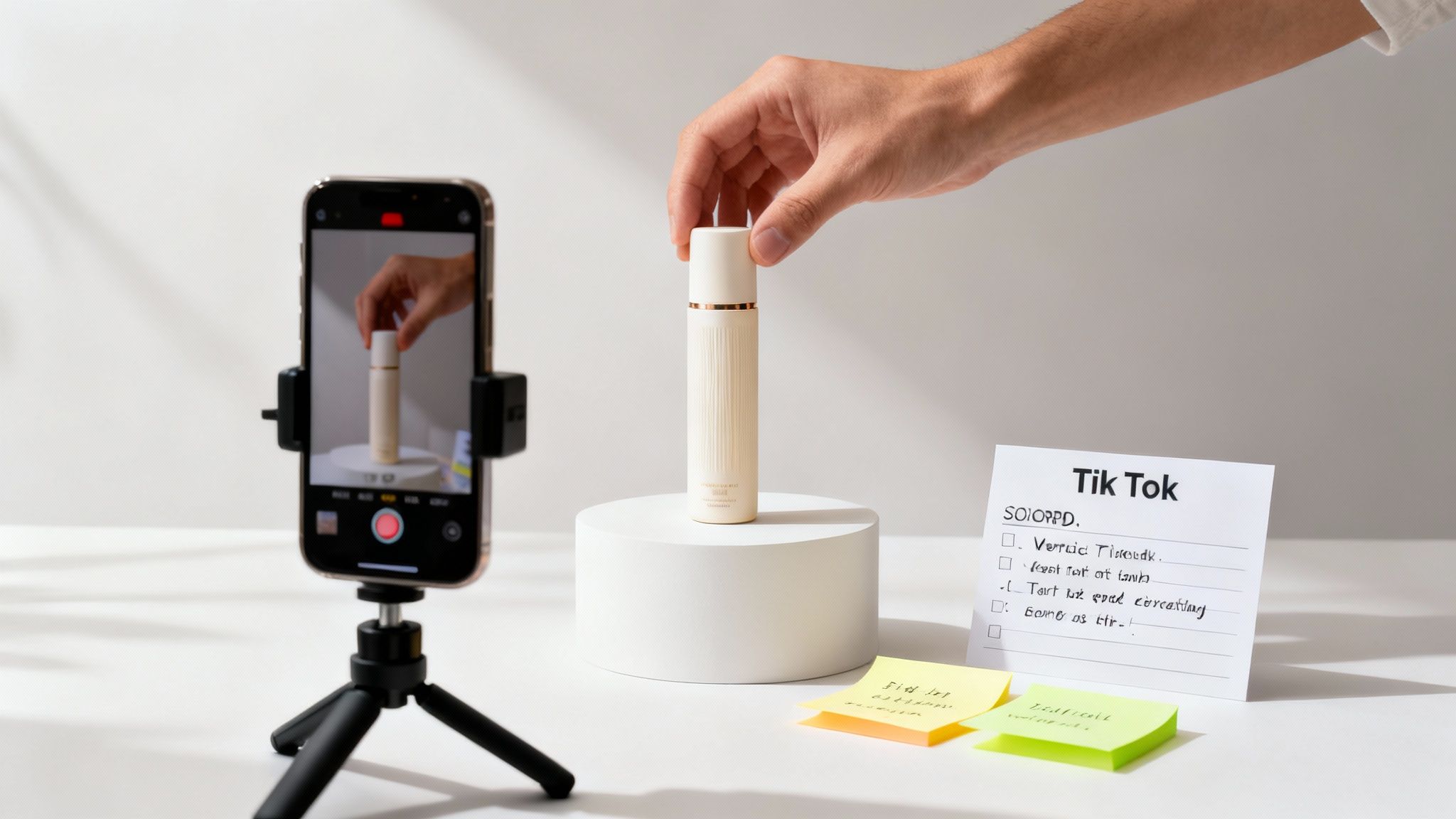
Polishing Your Product Listings for Discovery
Think of your product title and description as the hook that grabs a customer right after your video has piqued their interest. It needs to be clear, compelling, and stuffed with the right keywords so people can actually find you.
Here’s how I build a listing that actually converts:
- Keyword-Rich Titles: Don't just name the product. Think about what people would actually type into the search bar. Instead of "Blue T-Shirt," go for something like "Soft Vintage Blue Graphic Tee for Women."
- Benefit-Driven Descriptions: Your description needs to do more than list features. Don't just say it's made of "cotton fabric"; explain why that matters—"breathable, soft cotton that keeps you cool all day." Sell the outcome, not the spec sheet.
- High-Quality Visuals: This is non-negotiable. You need multiple high-resolution photos from different angles, lifestyle shots showing the product in a real-world setting, and even short video clips if you can.
Laying this groundwork is critical because it directly feeds into your video strategy. When someone sees your amazing product demo, they need to land on a page that immediately reinforces their decision to learn more.
Making Video Content That Actually Sells
Now for the main event: your video strategy. This is the heart and soul of selling on TikTok Shop. Forget the polished, corporate-style ads you’d see on other platforms—they fall flat here. TikTok rewards authenticity, creativity, and content that feels like it belongs on the "For You" page.
From what I’ve seen, the videos that really take off usually fit into a few categories:
- Problem/Solution Demos: Show a common, relatable problem and how your product is the perfect fix. This format is an absolute goldmine for gadgets, cleaning supplies, and beauty products.
- Behind-the-Scenes: People are curious. Show them how you pack an order, give a peek at how your product is made, or introduce your team. This builds a genuine human connection and makes your brand feel trustworthy.
- UGC-Style Content: User-generated content is pure gold. Encourage your customers to post videos with your product and feature them. If you're just starting out, you can create videos that look like they were made by a happy customer. It’s all about that authentic vibe.
The data is crystal clear: video is king. A recent analysis found that short videos drove a staggering 70.06% of total Gross Merchandise Value (GMV) on the platform. With an expected 71.4 million shoppers in the US by 2025, the opportunity for video-first sellers is massive. You can dig into more of these TikTok shopping statistics to see just how big the trend is.
The secret is to stop thinking like you're making an ad and start thinking like you're telling a story. Your goal isn't to interrupt someone's feed; it's to become a valuable part of it.
That simple shift in mindset is what separates the shops that struggle from the ones that absolutely crush it.
Supercharging Your Videos with AI
Let’s be real: creating a steady stream of high-quality, engaging video content is a huge challenge, especially if you're a small business with a tight budget and not enough hours in the day. This is where AI video generation tools like the Sora 2 AI video generator are becoming a game-changer.
Instead of needing pricey cameras, lighting, and editing software, you can generate cinematic, scroll-stopping product videos from a simple text prompt.
This throws the door wide open for creativity. You can test out different visual styles, create stunning lifestyle shots without booking a photoshoot, or even produce entire multi-scene storyboards that tell a compelling narrative about your product.
For instance, a skincare brand could use a prompt like, "cinematic shot of a woman with glowing skin at sunrise, light reflecting off a luxury face serum bottle on her vanity." An outdoor gear company might try, "drone shot following a hiker wearing our waterproof jacket through a misty forest, close up on water beading off the fabric."
Being able to generate these high-production-value visuals quickly means you can create more content, test more ideas, and figure out what truly clicks with your audience—all without breaking the bank.
AI Video Prompts for High-Converting TikToks
To give you a running start, I've put together some copy-and-paste prompt ideas for the Sora 2 text-to-video tool. These are tailored to popular e-commerce categories and designed to get you thinking about the visual story you want to tell.
| Product Category | Marketing Goal | Sora 2 Prompt Example |
|---|---|---|
| Beauty & Skincare | Showcase luxury and results. | "Extreme close-up macro shot of a single drop of hydrating serum landing on a flower petal, creating a ripple effect. Golden morning light, soft focus background." |
| Home Goods & Decor | Create an aspirational vibe. | "Time-lapse video of a cozy living room transforming from day to night. Sunlight streams in, highlighting our minimalist coffee table, then shifts to warm lamp light." |
| Fashion & Apparel | Highlight texture and movement. | "Slow-motion video of a woman in a flowing sundress walking through a field of wildflowers. The fabric billows in the wind, shot on 35mm film." |
| Gadgets & Tech | Demonstrate a "wow" factor. | "Clean, futuristic shot of our wireless charger on a dark, sleek desk. A phone is placed on it, and a glowing blue light pulses to life, shot in 8K resolution." |
By using tools like the Sora 2 storyboard generator, you can even plan out a sequence of these shots to build a full narrative—an unboxing, a transformation, or a day-in-the-life—all before you spend a dime on production. This strategic approach to content creation is your key to standing out in a crowded marketplace and turning views into sales.
Driving Sales with Promotions and Ads
A great video can get you some organic traction, but you can't just cross your fingers and hope the algorithm makes you a star. Consistent growth comes from a smart promotional strategy that doesn't just rely on luck. The goal is to build a machine that constantly brings new, qualified buyers to your shop.
This really boils down to a mix of two things: organic tactics that cost you time, and paid strategies that cost you money. When you get both humming along, you build real momentum and start to see your TikTok Shop sales truly take off. Let's dig into the free methods first—these are the bedrock of your promotional efforts.
Your Organic Promotion Playbook
Before you even think about putting a dollar into ads, you have to get good at the free stuff. These are the daily habits and on-platform tactics that keep your brand in front of people without any ad spend.
Think of this as your baseline for being discovered. It's how you get your products in front of the right eyeballs, build a community, and earn trust without a budget.
Ride the Sound Waves: Trending sounds are the heartbeat of TikTok. Tacking a popular audio clip onto your product video can give you an instant algorithmic bump, pushing your content to a much wider audience. Just scroll your "For You" page for a few minutes and you'll quickly see what's hot.
Be Smart with Hashtags: Don't just spam random hashtags and hope for the best. Use a strategic mix: broad, popular tags like #TikTokMadeMeBuyIt, niche tags that describe your product like #CeramicMugs, and your own branded tags. This simple trick helps TikTok categorize your content and serve it to people who actually care.
Actually Engage with People: It sounds so simple, but so many sellers skip this. Respond to comments. Ask questions in your captions. Go interact with other creators in your space. Real engagement signals to the algorithm that your content is creating conversation, which can seriously boost its reach.
Tapping into the Creator Affiliate Program
One of the most powerful organic tools you have is the TikTok Affiliate Program. This is your gateway to connecting with creators who will promote your products to their followers in exchange for a commission. It’s a classic win-win: they monetize their influence, and you get authentic, user-generated-style content that drives sales from a trusted source.
Getting started is pretty easy. Inside the Seller Center, you can create an affiliate plan, set your commission rates, and open your products up for creators to request.
The real magic here is getting your products into the hands of creators who have already earned the trust of your ideal customer. A single video from the right influencer can honestly drive more sales than a week's worth of your own content.
Firing Up the Ad Engine with TikTok Ads
Once your organic game is solid, it's time to pour some fuel on the fire. This is where TikTok Ads Manager comes in. It’s a seriously robust platform for creating hyper-targeted campaigns that can send viewers straight to your product pages.
This isn't about just hitting a "boost post" button. It’s about building real campaigns with specific goals, whether you want to drive traffic, rack up conversions, or retarget people who've already checked out your shop.
Here are the main ad formats you’ll be working with:
In-Feed Ads: These are the bread and butter. They show up right in a user’s "For You" feed and look just like a regular TikTok, but they have a clear call-to-action button like "Shop Now."
Spark Ads: This is a brilliant format that lets you promote your own organic posts. Even better, you can get permission from an affiliate to run their video featuring your product as an ad. Using a creator's post adds a huge layer of social proof that you just can't fake.
Video Shopping Ads (VSA): Built specifically for TikTok Shop, these are dynamic, automated ads that can showcase multiple products from your catalog. They are designed to shorten the path to purchase as much as possible, often sending users right to the checkout.
When you're just starting out, put your first ad dollars behind your best-performing organic videos. Use Spark Ads to amplify what you already know works. As you start to collect data, you can create new videos specifically for your ad campaigns.
The key is to start with a small daily budget, watch your results like a hawk, and only scale up the campaigns that are actually making you money. This data-first approach is how you turn ad spend from a gamble into a predictable source of revenue.
Managing Orders and Building Customer Trust
The moment a customer clicks "buy," the real work begins. Getting that sale is just the first step; turning that single transaction into a five-star review and a repeat customer is what truly builds a brand. This all happens in the post-purchase experience, and your command center for this is the TikTok Seller Center.
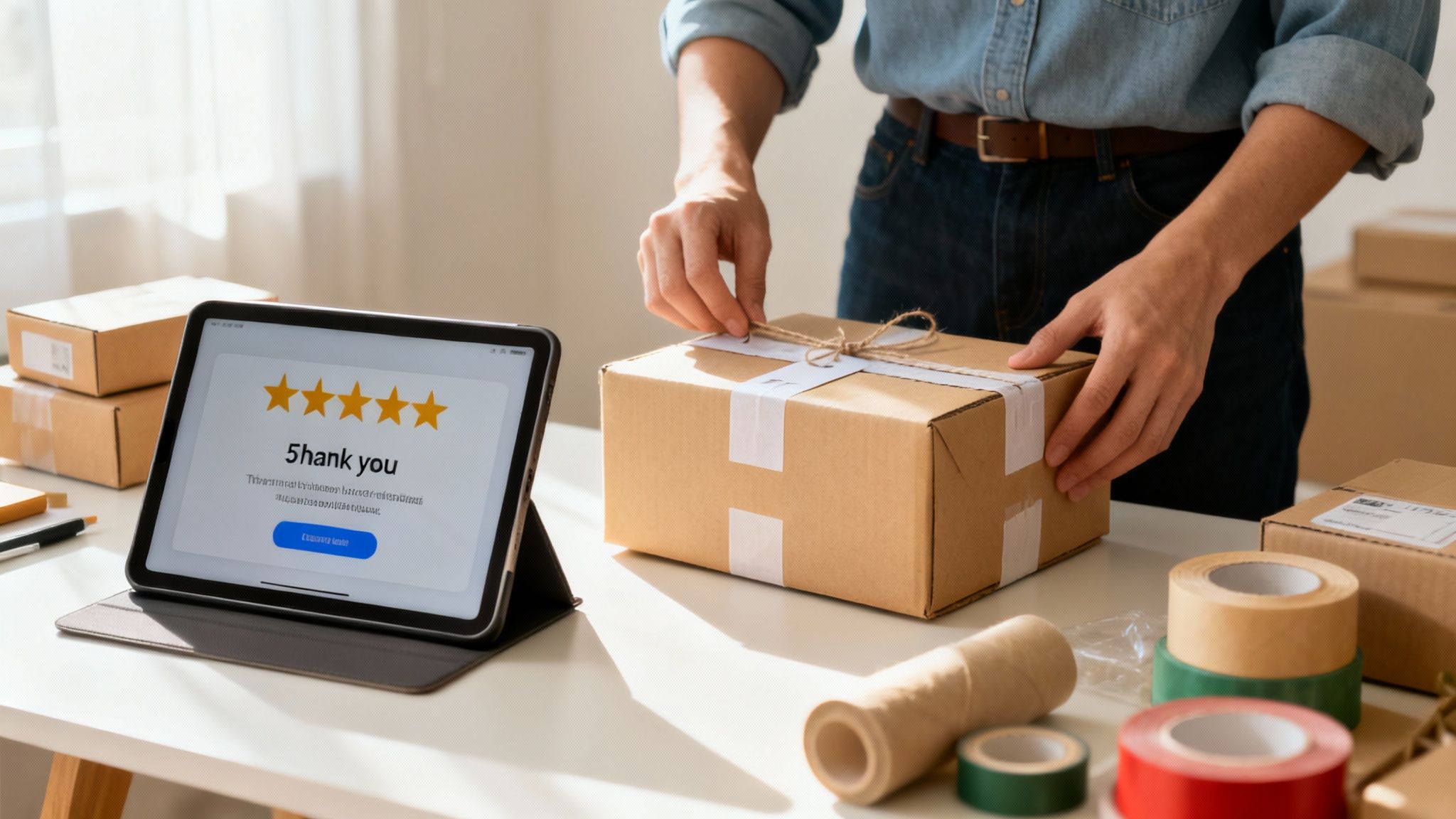
When an order notification hits, you need a solid system. The Seller Center lets you track everything from "Awaiting Shipment" to "Delivered." But before any of that, you have to decide how you're going to get your products to your customers.
Choosing Your Fulfillment Strategy
You really have two main paths for fulfillment, and the best one for you comes down to your order volume, resources, and how hands-on you want to be.
- Seller Shipping (Self-Fulfillment): This means you're packing and shipping everything yourself. It’s the perfect way to start. You get total control over the experience—think handwritten thank you notes, custom tissue paper, or a little freebie tucked inside. Those personal touches make for a memorable unboxing video.
- Fulfilled by a Third-Party (3PL): Once the orders start flooding in, packing them all yourself can become a serious bottleneck. This is where a third-party logistics (3PL) partner comes in. They store your inventory, then pick, pack, and ship orders for you, freeing you up to focus on creating content and growing your sales.
Most successful sellers I've seen start by fulfilling orders themselves and then make the switch to a 3PL once they’re consistently hitting a certain daily order volume.
The name of the game is speed and accuracy. TikTok shoppers are conditioned for fast shipping. If you can meet or beat that estimated delivery window, you've just earned an easy positive review and protected your seller rating.
Mastering Customer Service and Returns
Great customer service on TikTok Shop isn't just about being polite—it's about being proactive and transparent. You have to be quick to answer questions and graceful when handling problems. Shoppers are wary of scams and knock-offs; your responsiveness is what tells them you're a legitimate, trustworthy seller. With nearly half of users reporting they've seen scams, building that confidence is everything.
How you handle returns speaks volumes about your brand. TikTok has its own baseline policies, but the way you execute the process is what really matters.
- Respond Immediately: Jump on return requests within 24 hours. Even a quick "Got your request, looking into it now!" goes a long way.
- Make it Painless: Give them clear instructions and a pre-paid shipping label if that's part of your policy. A complicated return process is a one-way ticket to a nasty review.
- Learn from It: Don't just process the refund and move on. Find out why they're returning it. Was the sizing off? Did it look different from the video? This feedback is pure gold for improving your product listings and operations.
Building trust is the foundation for long-term success. For more on platform security and what to look out for, many sellers find guides on topics like "Is TikTok Shop Safe?" pretty helpful.
Ultimately, you want every customer interaction—whether it’s a simple question or a messy dispute—to leave them feeling heard and valued. That’s the real work that keeps your seller metrics in the green and turns one-time buyers into genuine fans.
Making Your TikTok Shop Last: Compliance and Data-Driven Growth
Getting that first viral video is a rush, but building a real, sustainable business on TikTok Shop requires a different mindset. It really comes down to two things: playing by the rules to keep your shop in good standing and digging into your data to make smarter moves. Nail these, and you're building a brand, not just chasing a trend.
Let's start with the non-negotiable part: you have to follow TikTok's guidelines. The platform is fiercely protective of its user experience, and they don't mess around with policies on things like prohibited items, shipping deadlines, or intellectual property. Trying to cut corners here is a surefire way to get your shop suspended or worse, shut down for good.
Keeping Your Shop Healthy and Compliant
Think of TikTok Shop’s policies as the basic rules of the road. A single misstep can damage your seller score, throttle your visibility, or get you kicked off the platform. It's just not worth the gamble.
Here's what to keep a close eye on:
- Prohibited Products: Get intimately familiar with the list of what you can't sell. There's no gray area here.
- Shipping Deadlines: You absolutely have to ship orders out on time, every time. Late shipments are one of the biggest dings to your seller metrics.
- Authenticity: This is a huge one. Don't even think about selling knock-offs or anything that infringes on another brand's IP. TikTok is cracking down hard.
Keeping your account in good standing isn't just about dodging penalties. A high seller score and a history of positive reviews are massive trust signals. The algorithm notices this and can reward you with better visibility.
Let Your Data Guide Your Next Move
With your compliance house in order, it's time for the fun part: using your analytics to grow. This is where you move from guessing what might work to knowing what does. The TikTok Shop dashboard has a ton of data, but don't let it intimidate you. Just focus on a few key numbers that tell the real story.
These three metrics will give you the most bang for your buck:
- Traffic Sources: Where is the traffic to your products actually coming from? Are people clicking through from your videos, your main profile, or posts from affiliate creators? This tells you exactly where your marketing efforts are paying off.
- Conversion Rate: Of all the people who land on your product page, what percentage actually hits "buy"? If you're getting a flood of traffic but only a trickle of sales, that's a massive clue that your product page needs work.
- Top-Selling Products: Your sales data is the ultimate truth-teller. Pinpoint your bestsellers and then go back and study the specific videos that drove those purchases. That’s your content formula, right there.
Checking in on these key performance indicators (KPIs) regularly turns them into a powerful feedback loop. You'll know exactly what content to make next, which products to reorder, and where to put your ad dollars.
For instance, if you notice one particular product is flying off the shelves, that’s your green light to create a whole new series of videos around it. You could even use a tool like the Sora 2 AI video generator to quickly produce a bunch of fresh, high-quality videos for that proven winner, all without the hassle and cost of a new video shoot. This is how data works—it points you toward what's working so you can reinvest your time and money with confidence.
Got Questions? Let's Talk TikTok Shop
If you're just getting your feet wet with TikTok Shop, you've probably got a few questions buzzing around. I've heard them all. Here are the straight answers to some of the most common things new sellers ask.
What's the Real Cost of Selling on TikTok Shop?
TikTok Shop came out of the gate with super low fees to get sellers on board, but things have leveled out. You should plan for a seller fee that's heading toward 8% for most categories.
This is a big one. You absolutely have to bake that 8% commission into your pricing, right alongside your ad spend and shipping costs. If you don't, you'll be working for free before you know it.
Do I Absolutely Need a Shopify Store to Sell?
Nope, you don't. You can run your entire operation right from the TikTok Seller Center if you want to. It’s a self-contained ecosystem.
That said, if you’re already selling on Shopify, connecting the two is a no-brainer. It keeps your inventory and orders in sync, saving you a ton of headaches down the line.
What's Actually Selling on TikTok Shop?
The heavy hitters are definitely in the health, beauty, and apparel spaces. But honestly, the category is less important than the product's "viral factor."
Products that blow up are the ones that are visually striking, demonstrate an undeniable benefit, or have that instant "wow" factor. It's all about showing, not just telling. This is exactly where a tool like Sora 2 shines—it can help you create those visually stunning narratives that make a product, any product, look irresistible.
Ready to create stunning, high-converting product videos without the Hollywood budget? saro2 lets you generate cinematic visuals from simple text prompts. Start creating scroll-stopping content for your TikTok Shop today at https://saro2.ai.