Your Guide to Sora 2 Online AI Video Creation
Learn how to use Sora 2 online to create cinematic AI videos. This guide covers everything from prompts and storyboards to optimizing content for marketing.
If you've been searching for "sora 2 online," you've probably waded through a lot of discussions about OpenAI's core technology. But here’s the thing: the fastest way to actually use a Sora 2 style model is through a dedicated platform. A great example is saro2.ai, which gives you a web-based interface to create those cinematic videos without needing a special invite or messing with complicated software. It’s built for creators and marketers who just want to make great content for TikTok ads, ecommerce, and video marketing campaigns.
Getting Started with the Sora 2 Video Generator
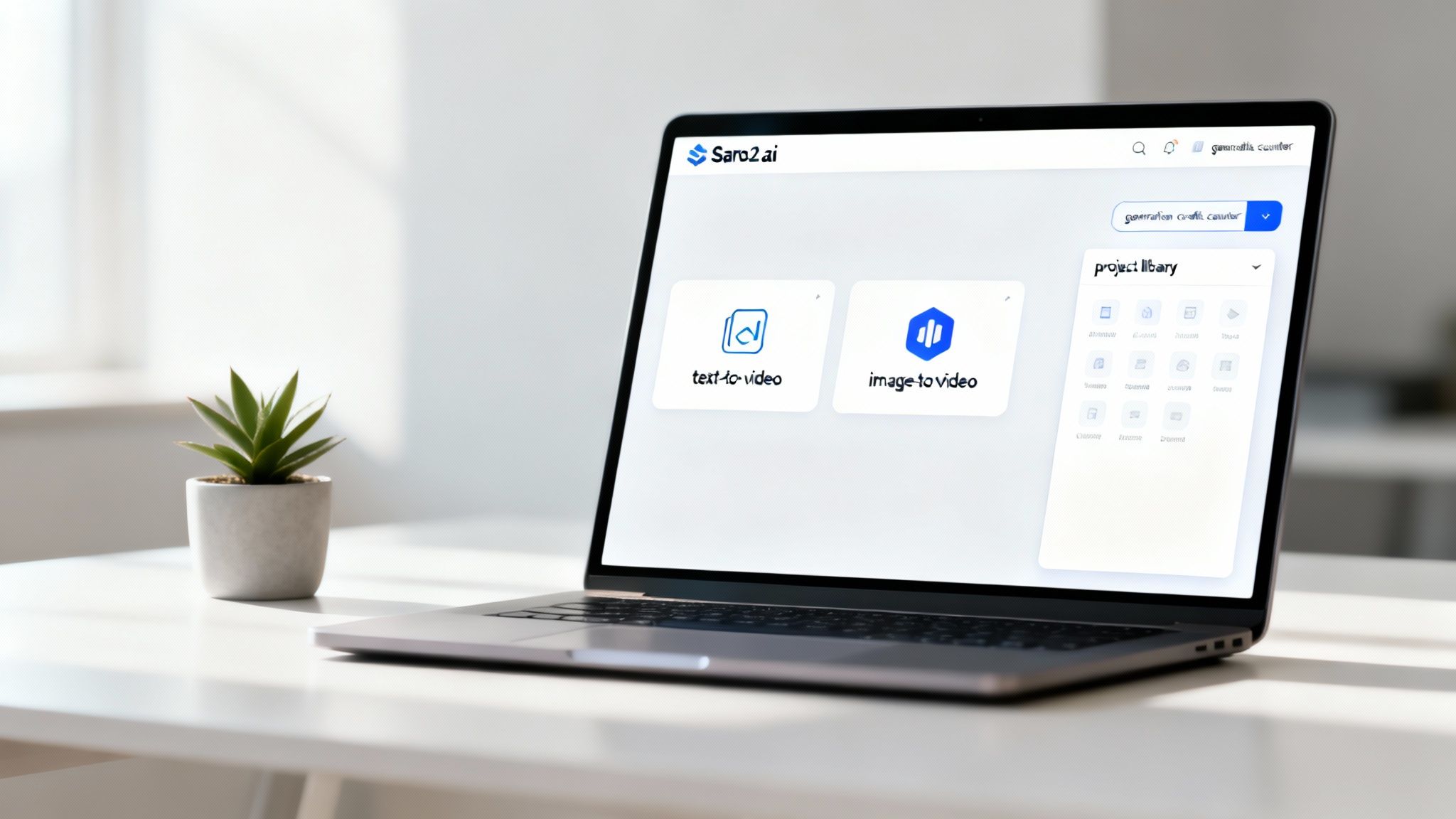
Diving into a new AI video tool can seem like a lot, but a platform like saro2.ai is designed to be pretty intuitive. The whole point is to get the tech out of your way so you can focus on the creative side of things. Once you’ve signed up, you’ll land on the main dashboard—this is your command center for everything related to the Sora 2 text-to-video generator.
Right away, you'll see the two main tools that do the heavy lifting: text-to-video and image-to-video. These are your go-to options for bringing an idea to life, whether you’re starting with a simple written prompt or a specific image you want to animate.
Navigating the Core Interface
The saro2.ai dashboard is laid out to feel familiar, almost like a simplified, AI-powered video editor. Besides the big generation tools, you’ll find your project library. This is where every clip and storyboard you create gets saved, so you can always go back to tweak, re-edit, or download your work.
You'll also want to keep an eye on your generation credit balance. Every video you make uses up credits, so knowing how many you have helps you plan your projects without any surprises. This is usually displayed right up top, near your account info.
A good AI video platform should make the technology feel invisible. Your job is to focus on the story and the prompts, not on the buttons.
This kind of simplicity is exactly why these tools are taking off. The technology behind Sora 2, which OpenAI first demonstrated, ignited interest in accessible AI video. That tells you just how much people want easy-to-use AI video tools. If you're curious, you can explore more about the impact of Sora 2 on social media to see how quickly it grew.
To help you get your bearings, I've put together a quick rundown of the main features you'll be using in the saro2.ai platform. Think of this as your cheat sheet for getting started with Sora 2 video examples.
Sora 2 Video Generator: Feature Quick-Start Guide
| Feature | Primary Function | Best For |
|---|---|---|
| Dashboard | The central hub where you can access all tools and projects. | Getting a quick overview of your work and starting a new project. |
| Text-to-Video | Generates a video clip from a written description or Sora 2 prompt. | Bringing a concept to life from scratch with a detailed idea. |
| Image-to-Video | Animates a static image to create a short video clip. | Adding motion to logos, photos, or character designs. |
| Storyboard Generator | Lets you arrange multiple clips in a sequence to build a narrative. | Creating multi-scene videos, ads, or short stories. |
| Project Library | Stores all your generated video clips and storyboards. | Re-editing, downloading, or organizing your past creations. |
| Credit Counter | Displays your remaining video generation credits. | Managing your usage and planning how many videos you can create. |
By getting a handle on these key areas, you'll be able to bypass that initial learning curve and jump straight into making compelling videos—whether it's for a TikTok ad, a product video for your Shopify store, or just a fun personal project.
Mastering Your Creative Workflows
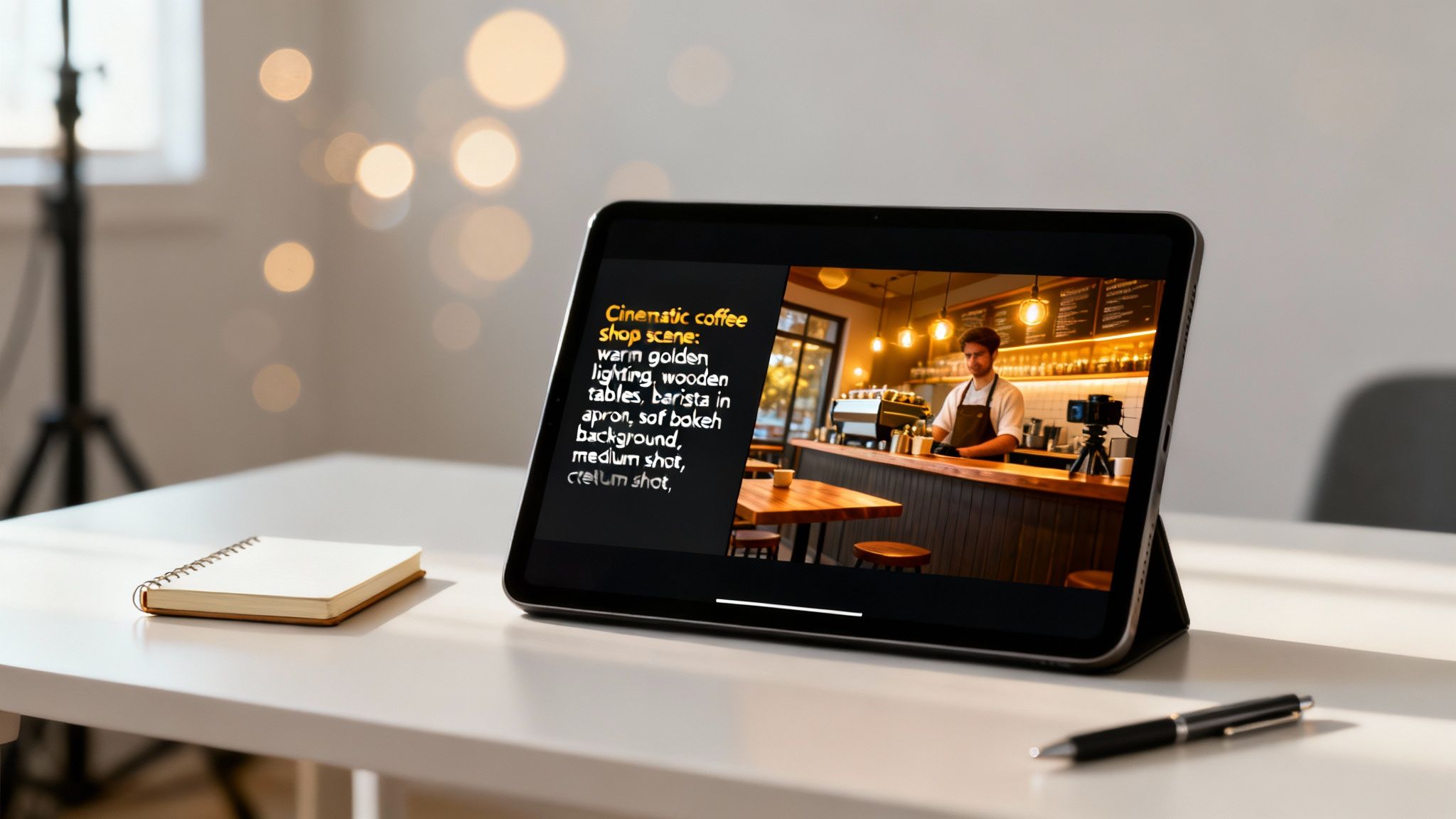
Once you've found your way around the saro2.ai dashboard, the real fun begins. Your first move is to pick one of two creative paths: build a scene from scratch using only words, or breathe life into a static image. The right choice really just depends on what you're starting with and where you want to go.
The first option, text-to-video, is your blank canvas. This is all about taking an idea stuck in your head and turning it into a video with a detailed prompt. It’s the way to go when you have a clear vision but no visuals to start from. Just remember, the final video is only as good as the Sora 2 prompts you write.
Crafting Cinematic Sora 2 Prompts from Text
If you want those cinematic, Sora 2–style results, you have to start thinking like a cinematographer. Don't just tell the AI what to show; tell it how to show it. A prompt like "a woman drinking coffee" is fine, but it will give you a pretty generic clip. A detailed prompt, on the other hand, tells a story.
Let's walk through a real-world example. Imagine you’re creating a TikTok ad for a high-end coffee brand and you want a moody, premium feel. You need to layer in specifics about the setting, camera work, and lighting to get there.
Example Prompt Breakdown:
- Subject: "A stylish woman with dark hair sits at a rustic wooden table in a dimly lit coffee shop."
- Action: "She slowly raises a steaming ceramic mug to her lips, a thoughtful expression on her face."
- Atmosphere: "Sunlight streams through the window, illuminating dust particles in the air, golden hour glow."
- Camera Work: "Slow dolly shot pushing in, shallow depth of field, focus on her eyes."
- Style: "Cinematic, moody, 8K, hyperrealistic."
Giving the model this level of detail provides clear instructions. The result is a video that feels intentional and professional, not like something a machine just spat out randomly. This is how you generate compelling Sora 2 video examples.
Animating Your Vision with Image-to-Video
Your second path is the image-to-video workflow. This is your best friend when you already have a great visual to work with. Think product photos for your Shopify store, concept art for a character, or even a brand logo. Here, you upload your image and write a prompt that describes the motion you want to see.
This method is incredibly useful for ecommerce and product videos:
- Adding subtle movement to a product photo to make it pop in a social media feed.
- Animating a logo for a quick ad intro.
- Making a character illustration move for a short story or post.
The real magic of a tool like a Sora 2 video generator is how fast it can turn an abstract idea or a single frame into a compelling piece of video. Both the text-to-video and image-to-video workflows are built to make that happen with as little friction as possible.
For an e-commerce brand, you could upload a slick photo of a new handbag and prompt it with something like, "subtle zoom-in, light reflects off the leather, background gently blurs." The AI will generate a short clip that keeps your product looking exactly as it should while adding a touch of dynamic energy—perfect for an engaging ad.
Picking the right workflow is your first real step toward mastering AI video marketing strategies.
Building a Story with a Sora 2 Storyboard Generator
A single, stunning clip is one thing, but telling a real story? That requires weaving multiple scenes together. This is where the Sora 2 storyboard generator really comes into its own, letting you move beyond a simple moment and build a complete narrative.
Let’s walk through this process by creating a simple three-scene ad for an e-commerce brand selling artisanal candles. We'll turn a basic concept into a visual sequence that actually feels compelling.
The first thing you need to do is think like a director. Instead of writing one massive, all-encompassing prompt, you have to break your story down into individual shots. Each scene will need its own prompt, but they all have to feel like they belong in the same world.
Crafting a Cohesive Sequence
For our candle ad, the goal is a warm, relaxing vibe. I'm going to plan out three distinct scenes to build this feeling:
- The Opening: A tight, close-up shot to introduce the product.
- The Atmosphere: A wider shot that puts the candle in a cozy, aspirational setting.
- The Human Element: A final scene that connects the candle to a positive emotion.
Now, let's translate that plan into actual Sora 2 prompts for the storyboard.
Scene 1 Prompt: Macro shot of a handcrafted soy candle, flame flickering gently. Soft, warm lighting, cinematic, shallow depth of field, focus on the textured ceramic jar.
Scene 2 Prompt: Wide shot of the same candle on a wooden coffee table next to a steaming mug and an open book. A cozy living room with a soft blanket draped over a sofa in the background, golden hour light.
Scene 3 Prompt: A woman with gentle features smiles softly as she enjoys the candle's scent, her face illuminated by the warm candlelight. Relaxed and peaceful atmosphere, close-up shot.
Once you arrange these in the storyboard generator, you've created a logical flow. From there, you can choose simple transitions, like a fade or a clean cut, to stitch the clips together seamlessly.
Keeping Your Style and Characters Consistent
Honestly, one of the biggest challenges with AI video right now is consistency. It's incredibly easy for a character's appearance or the video's style to shift dramatically from one clip to the next if you aren't careful.
The secret to consistency is all about repetition and being incredibly specific in your Sora 2 prompts. You have to treat your prompt like a detailed set of instructions for an actor and a cinematographer. If you want the same person in every shot, you need to describe them identically every single time.
This means using the same key descriptors for your subject and style in every single prompt. If your candle is in a "textured ceramic jar" in the first scene, that exact phrase needs to be in the second. If your character has "wavy brown hair," make sure you mention that in all relevant prompts. This repetition anchors the AI, guiding it to produce a unified video instead of a jumbled mess.
The ability to create videos like this is why tools offering a Sora 2 video generator have taken off, especially with creators who jump on new platforms fast. Getting a handle on storyboarding is the key. It's how you move past making fleeting clips and start building narratives that can actually capture—and hold—someone's attention.
AI Video Marketing: Sora 2 for TikTok Ads and Ecommerce
So you’ve created a beautiful video. That’s great, but it’s only half the job. If you want that video to actually perform—whether it's a viral TikTok ad or a slick product video for your Shopify store—you need to tailor it for the platform. It's a critical step that so many people skip.
Nail Your TikTok Ads and Shopify Showcases
Getting your export settings right from the start saves a ton of headaches later. For TikTok, the rules are simple but strict. You absolutely need a 9:16 vertical aspect ratio. It fills the whole screen, making your content feel immersive and native to the feed. I always export at 1080p; it’s the sweet spot between crisp quality and a file size that won't make users scroll away while it buffers.
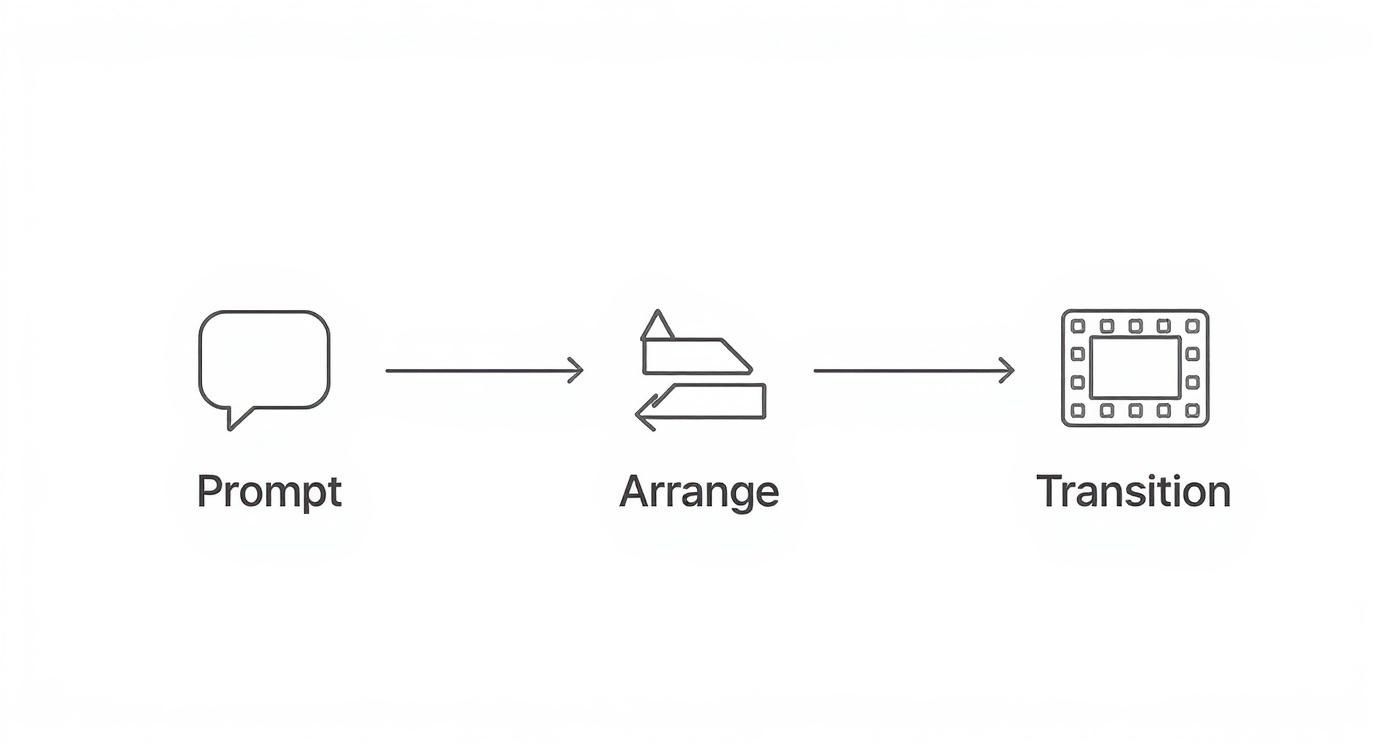
Think of the video creation process as a simple progression: you start with a solid prompt, arrange your generated scenes into a story, and then smooth it all out with transitions. Each part builds on the last to create something cohesive.
Crafting Ads That Feel Like TikToks
When you’re making content for TikTok, your entire mindset needs to shift. You’re fighting for fractions of a second of attention. Your Sora 2 prompts have to be geared toward creating short, punchy, and endlessly watchable loops.
Here’s what I focus on in my prompts for TikTok ads:
- Whip-Fast Pacing: I use phrases like "quick cuts," "dynamic motion," or "energetic transitions" in my prompts. The goal is to generate clips that match the high-octane energy of the "For You" page.
- The Perfect Loop: Think about how to make the scene start where it ends. A prompt like, "a bottle of lotion being picked up and placed back down, seamless loop," is gold. It creates a hypnotic effect that can really boost watch time.
- Unmissable Visuals: Don't be shy. Use keywords that scream for attention—think "vibrant colors," "high contrast," and "eye-catching." You need to stand out.
The secret to a great TikTok ad is making it feel less like an ad and more like a discovery. You want to create something so visually satisfying that people watch it three times before they even notice the brand.
Polishing Ecommerce and Product Videos for Shopify
Over on Shopify, the game is different. The goal isn't just to entertain; it's to inform and sell. Your ecommerce and product videos need to clearly and beautifully showcase the product. That means your prompts should focus on clean, high-quality visuals that let the product be the hero.
When I’m generating product videos with a Sora 2 video generator, I lean into prompts that create a professional, distraction-free setting. A classic prompt like, "360-degree rotation of a product on a pure white background," works every time. It gives shoppers a full view and a clear sense of what they’re buying.
You can also create more aspirational lifestyle shots. Try prompting something like, "a luxury watch resting on a marble countertop next to a leather-bound journal." This places the product in a context that tells a story and elevates its perceived value.
By thinking about the platform before you even start prompting, you ensure your final video isn't just a cool AI creation, but a powerful tool built to do a specific job.
Troubleshooting Common Sora 2 Generation Issues
https://www.youtube.com/embed/sUXFBQjjkgA
Even with a powerful Sora 2 video generator like saro2.ai, you're going to hit a generation that just feels... off. It happens to everyone. Maybe your character’s face morphs between scenes, or a weird, glitchy artifact pops up out of nowhere.
This is a totally normal part of the creative process. The good news is that learning how to troubleshoot these little quirks is what will save you time and credits in the long run. Most issues are fixable with small, deliberate tweaks to your Sora 2 prompts. Mastering this back-and-forth is what separates casual users from the people who produce consistently incredible work.
Fixing Inconsistent Characters and Styles
Character consistency is probably the biggest headache in AI video generation right now. You'll nail the perfect character in your first scene, but by the second, they look like a completely different person. The best way I've found to fix this is with hyper-specific, repeated descriptions.
Let’s say your first prompt describes a "woman with shoulder-length blonde hair wearing a red jacket." That exact phrase needs to be copied and pasted into every single prompt where she appears. Don't try to shorten it or rephrase it. Think of that description as an anchor for the AI; it keeps the model locked onto the right visuals.
Another great trick is to use the seed number. If you get a generation you really like, grab its seed number. Reusing that same seed in your next prompt tells the AI to build the new video on a similar visual foundation. This dramatically boosts your chances of keeping everything looking consistent.
Eliminating Unwanted Visual Elements
What about when the AI just adds weird stuff? An extra limb, a floating object, or some bizarre distortion. This is where negative prompts are your best friend. They're basically a "do not include" list for the AI.
For example, if you're trying to generate a pristine, empty forest but the AI keeps adding people, you can add a negative prompt like: --no people, hikers, tourists. This simple command is often all it takes to clean up the scene.
Learning to troubleshoot is less about fixing errors and more about guiding the AI toward your specific vision. Every prompt is a conversation, and subtle changes in language can lead to completely different results.
This process of refining and controlling the AI's output is at the heart of the current conversation around these tools. The quick launch of models like Sora 2 kicked off major debates about safety and misuse, especially around creating realistic deepfakes. These guardrails are a big part of the ongoing effort to make sure creative tools are used responsibly.
Common Questions About Sora 2 AI Video Generation
As you start working with AI video tools for Sora 2 AI video generation, a few questions always pop up. Let's tackle some of the most common ones I hear from other creators, with practical answers to help you get better results, faster.
How Do I Keep My Character Looking the Same in Different Scenes?
This is the big one, right? Nailing character consistency is probably the trickiest part of AI video. The most reliable method I've found is a two-part punch.
First, get extremely detailed in your character description. Don't just say "a man in a suit." Describe the suit's color, the tie, his hair style, a specific watch—anything that makes him unique. Then, copy and paste that exact description into the prompt for every single scene he's in.
Second, pay attention to the 'seed' number. When you generate a clip you love, grab that seed number and reuse it for the next scene featuring that character. Combining a rock-solid description with a consistent seed is your best shot at making your character feel continuous.
What’s the Difference Between a Sora 2 Video Generator and a Mobile App?
It really comes down to what you're trying to accomplish. A web platform like saro2.ai is built for a more professional workflow. Think of it as a production studio. It’s designed for building out complete projects with its multi-scene Sora 2 storyboard generator, managing different assets, and giving you specific export options for things like TikTok ads or Shopify ecommerce and product videos.
A standalone mobile app, on the other hand, is more like a quick-edit tool. It's fantastic for generating a single, fun clip to share on social media right away. They're all about speed and simplicity, not the fine-tuned control you need for a bigger commercial or narrative project. Platforms like saro2.ai are strong Sora 2 alternatives for this reason.
How Can I Write Sora 2 Prompts That Actually Look Cinematic?
To get that cinematic feel, you have to start thinking like a filmmaker, not just a writer. Your prompt needs to include the language of cinematography. Don't just describe the "what," describe the "how."
Here are a few things I always try to include:
- Camera Movement: Instead of a static shot, ask for a "dolly shot," "crane shot," or a "slow push-in."
- Lenses & Framing: Use terms like "wide angle," "telephoto lens," or "shallow depth of field" to control focus and perspective.
- Lighting is Everything: Specify the mood. Try "cinematic lighting," "golden hour," "noir lighting," or "dramatic shadows."
- Art Direction: Give the AI a visual reference, like "in the style of a Wes Anderson film" or "hyperrealistic 8K."
The more you can feed the AI the specific vocabulary of cinema, the more it has to work with. Layering these details is what elevates a simple concept into something that looks professionally shot.
Can I Actually Use These Videos for My Business?
Absolutely. One of the main reasons to use a platform like saro2.ai is that the videos are typically cleared for commercial use. This makes it a fantastic tool for creating high-quality ads, e-commerce product showcases, or any other marketing content you can dream up.
That said, it's always smart to double-check the terms of service of any platform you use. A quick read-through will give you total peace of mind and ensure you're squared away on their licensing agreements before you launch a major campaign.
Ready to put this into practice and create some amazing videos for your brand or project? With saro2.ai, you have a full Sora 2-style video generator right in your web browser. Jump in and start building your first storyboard.